

An English-language Noh 英語能

Written and composed by Gary Mathews.
Based on House with a Red Tile Roof by Kawata Fumiko. Masks by Hideta Kitazawa.
作詞・作曲: ゲイリ・マシューズ。 川田文子の『赤瓦の家』に基づく創作能。 能面: 北澤秀太
Soldier Why act so strangely as to walk barefoot, carrying your footwear in your hand?
Woman Because I was deceived and abandoned in a country where I knew no one, was desperate, did not care about anything
Soldier Such is how a human being would become
Woman A human being who had
Soldier Lost everything would
Woman Do as I did . . .
兵士: 地下足袋を手に持ちながら、わざわざ裸足で歩くとは、一体どうしてなのですか
女: 誰一人知らない国に騙されて連れて来られ、棄てられたのです、 自暴自棄、 どうでもなれと思ったのです
兵士: そうなるのですね、 人間は
女: 人間は
兵士: すべてを失った人間は
女: 私のようになるのです
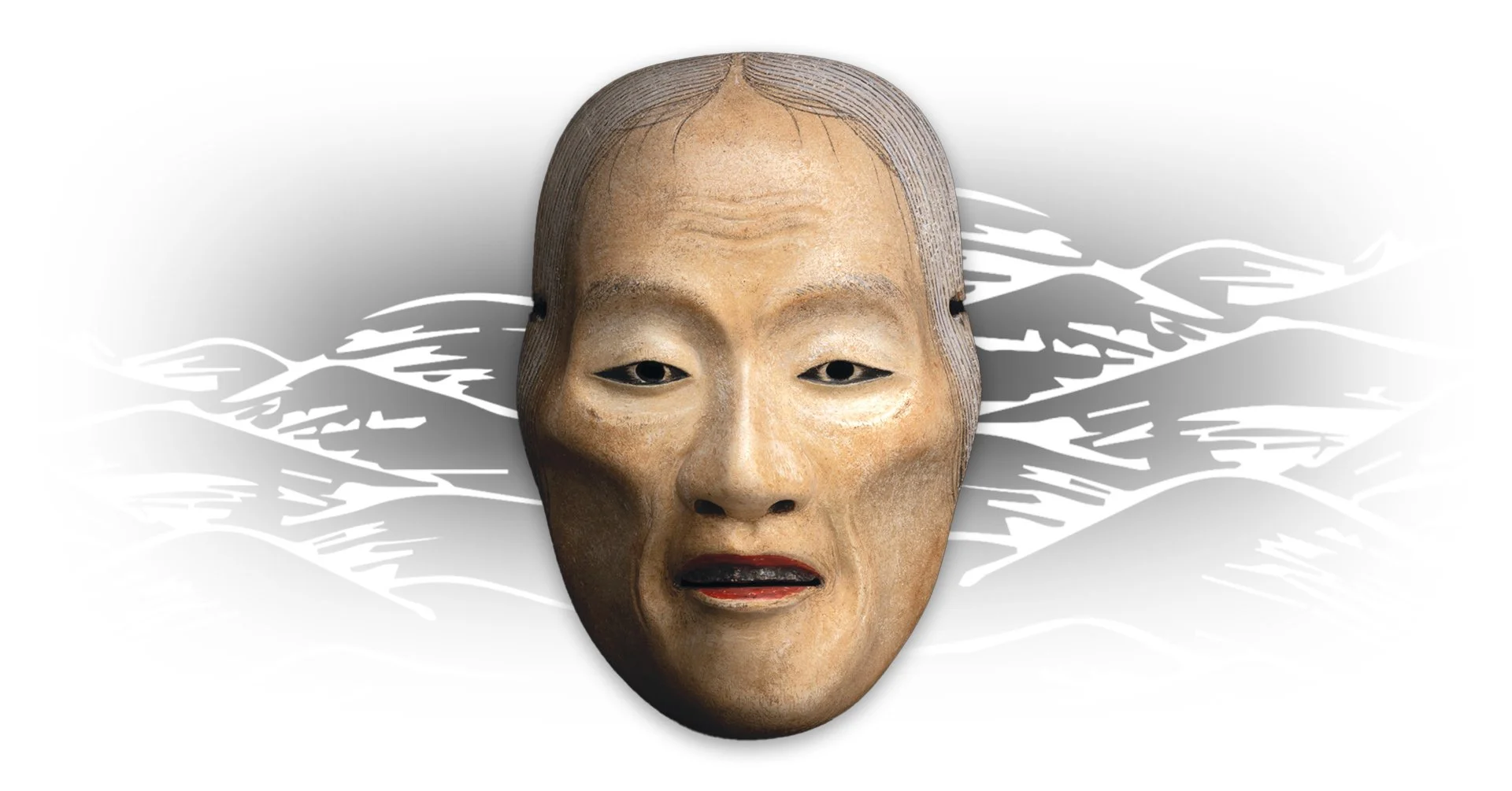
A Japanese veteran arrives in Okinawa, carrying decades of regret, to pray for the souls of comfort women. But when this gesture draws forth the restless spirit of Pae Pong-gi, he learns that what matters most to her is for her voice to be heard. Based on biographical testimony, Pae Pong-gi tells of trauma, endurance, and the possibility of reconciliation through a transformative encounter between two human beings. It meditates on one survivor’s harsh experiences, but also on how all survivors’ unique stories might best be honored. Noh’s blend of austere staging and emotive richness draws the imagination deep into the characters’ inner lives, and is thus a uniquely powerful vehicle for sharing human experience.
後悔の念に駆られた元日本兵が慰安婦の霊に祈りを捧げるために沖縄を訪れます。彼は心休まらず彷徨っていたペポンギの霊に会い、昔知り合ったその女性が望むのは祈りではなく彼女の話を聞き伝えることだと気づきます。『ペ・ポンギ』は個人史をもとに創作されていて、心の傷、苦悩、忍耐を表現しています。そして、二人の人間の出会いと自己変革のなかに和解の可能性があることを示唆します。この能は一人のサバイバーの苦渋に満ちた体験を深く捉えようとしていますが、全てのサバイバーの一人ひとりの個人的な話に敬意を表しています。能は、厳粛な舞台形式と豊かな感情表現で、登場人物の心の内面を奥深くまで想像させます。だからこそ、人間の体験を共有するための強力な媒体となります。